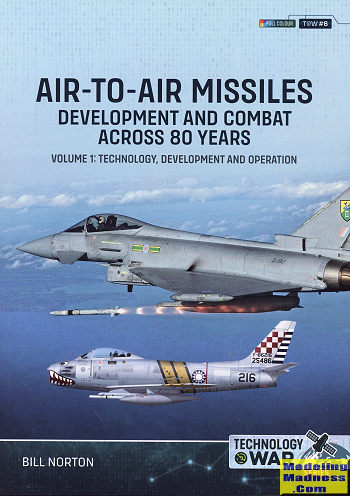
 When aircraft
first started carrying offensive weapons, they were in the form of hand head
pistols, rifles and grenades. It was soon found that those were not really all
that useful against other aircraft so planes were developed that could carry
airborne versions of the water-cooled machine guns used on the ground. In this
case, it was the air flowing over the barrel that provided the cooling. From
there, the fighter aircraft was developed and things went forward from there. In
all subsequent conflicts of the 20s, 30s, and throughout WWI, it was the machine
gun that was the main items used on aircraft, even though unguided rockets were
used with some effect by the Germans in the last years of the war.
When aircraft
first started carrying offensive weapons, they were in the form of hand head
pistols, rifles and grenades. It was soon found that those were not really all
that useful against other aircraft so planes were developed that could carry
airborne versions of the water-cooled machine guns used on the ground. In this
case, it was the air flowing over the barrel that provided the cooling. From
there, the fighter aircraft was developed and things went forward from there. In
all subsequent conflicts of the 20s, 30s, and throughout WWI, it was the machine
gun that was the main items used on aircraft, even though unguided rockets were
used with some effect by the Germans in the last years of the war.
However, towards the very end of the war in Europe, the
Germans developed a wire guided missile. This was successfully tested, but the
war ended before it could be deployed. Post war, when rockets were used, they
were unguided versions based on the R4M folding fin rockets used by Me-262 and
FW-190s during the last weeks of the war. What was needed, was something that
could detect the heat signature of the would be victim's engine. That technology
was finally miniaturized and placed in the nose of the first operational
missiles. This was the AIM-4 Falcon. It worked great against bombers in a stream
as it took several seconds for the seeker head to be cooled down and since
bombers didn't maneuver, it was perfect. However, it was not useful at all
against rapidly maneuvering aircraft. For that something smaller and more agile
was needed. This led to the AIM-9 Sidewinder, the missile that was first
successfully used in combat in 1958 by a Republic of Chinese F-86 against a PRC
MiG-17. From there, the technology has grown and missiles have become
considerably more reliable and deadly.
This book covers the history of the development of the
AAM by all nations as well as going into the technology itself. This includes
the tactics used as missiles are not a guaranteed product. There are ways of
reducing or even cancelling their effectiveness and that is also covered.
Another area covered are the fundamentals of building one of these weapons. Like
other books in the series, there are a ton of photographs as well as full color
charts, drawings and profiles. I dare say that it will answer just about all
questions one has on the subject. It is a book from which I learned a great deal
and I'm sure you will as well. Most highly recommended.
October 2025
Copyright ModelingMadness.com. All rights reserved. No
reproduction in part or in whole without express permission.
Review book courtesy of
Casemate Publishers, where you can order your copy
at this
link.
If you would like your product reviewed fairly and quickly, please
contact
me or see other details in the
Note to
Contributors.