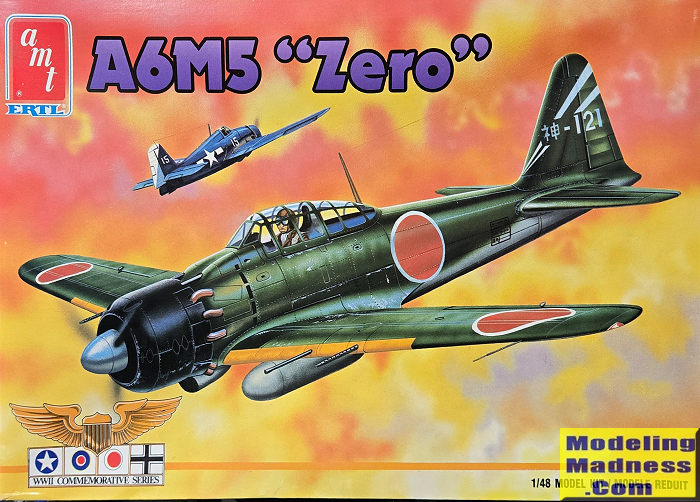
AMT 1/48 A6M5 'Zero'
| KIT #: | 8872 |
| PRICE: | Raffle win (about $2.00) |
| DECALS: | Three options |
| REVIEWER: | Scott Van Aken |
| NOTES: | 1990 AMT release. Otaki tooling |
| HISTORY |
| THE KIT |
 Back
in the early 1990s, AMT/ERTL had decided they wanted to do airplane models. This
was when they developed the A-20 series as well as their Tigercats in 1/48 and
the kits were welcomed by modelers. This also included a series of P-40s that
were later taken over by AMtech. In order to round out the offerings, they
reboxed Otaki's line of WWII fighters, which, despite being tooling that was 20
years old, still met modern standards of engraved panel lines and nicely
detailed interiors.
Back
in the early 1990s, AMT/ERTL had decided they wanted to do airplane models. This
was when they developed the A-20 series as well as their Tigercats in 1/48 and
the kits were welcomed by modelers. This also included a series of P-40s that
were later taken over by AMtech. In order to round out the offerings, they
reboxed Otaki's line of WWII fighters, which, despite being tooling that was 20
years old, still met modern standards of engraved panel lines and nicely
detailed interiors.
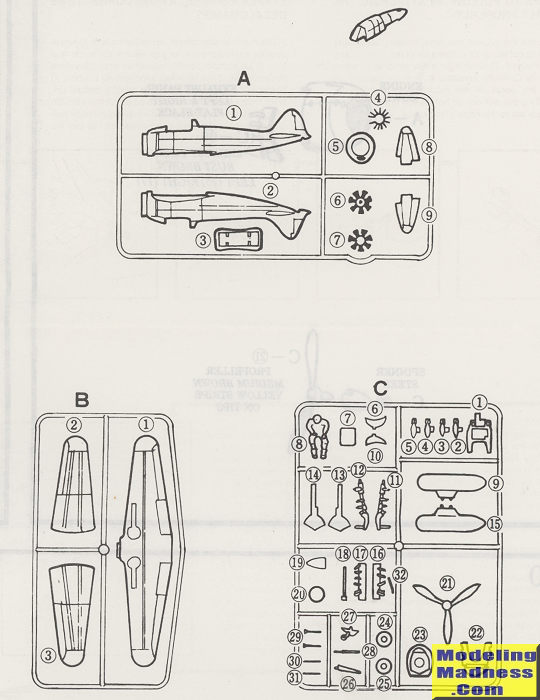
They still hold up fairly well some 35 years later, though they are simplistic by comparison with what has since been produced by Hasegawa, Tamiya, and others. This kit is the late war A6M5c. The kit provides a nicely appointed interior and there is detail on the fuselage sidewalls. The seat is somewhat generic, but a pilot is provided to cover up what's missing.
The kit provides a two row radial engine with a separate
pushrod piece for the front. A single piece cowling is provided with the exhaust
built into a cowl flap piece. The transparency is s single piece with the frame
lines molded on the inside of the canopy. Who thought it was a good idea? The
wing is a single lower section with molded in gear wells that are too
shallow. The kit provides small bombs for the outer bomb racks and a centerline
drop tank. Landing gear are OK as are the wheels, but nothing to write home
about. 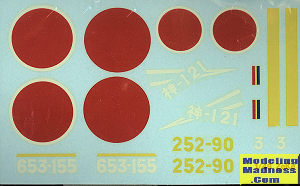
Instructions are quite large with generic color information. Ignore what it says about the interior colors as A6Ms were not dark grey on the inside nor were the gear wells in chromate green. Three markings options are provided, all in dark green over grey. The planes differ only by tail markings and while I'm thinking that the decals are probably still OK, there are a lot of aftermarket options out there for something different.
| CONCLUSIONS |
So what we have here is a kit from the early 1970s that is still quite buildable. It lacks the detail and therefore the fussiness of modern A6M kits. I'm not real jazzed about the way the canopy frames are done, as that will simply make masking it that more difficult. The builder will also have to deal with some flash, which is typical of older kits, but with some skill and perseverance, a nice model will result.
September 2025
Copyright ModelingMadness.com. All rights reserved. No reproduction in part or in whole without express permission from the editor.
If you would like your product reviewed fairly and fairly quickly, please contact the editor or see other details in the Note to Contributors.