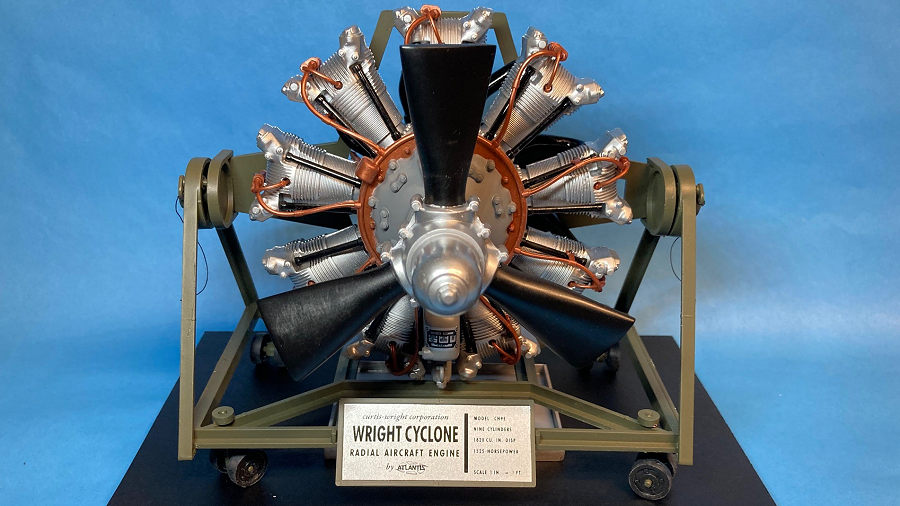
Atlantis 1/12 Wright R-1820 Cyclone
| KIT #: | M6052 |
| PRICE: | $35.99 SRP |
| DECALS: | Data plates |
| REVIEWER: | H. Davis Gandees |
| NOTES: | 2022 rebox of Monogram kit. |
| HISTORY |
The Wright R-1820 Cyclone was manufactured from 1931 up to the 1950s. It was used on early DC-3s and in many WWII aircraft, including the B-17 and dozens of other fighters and bombers. Later aircraft such as the T-28B/C and S-2 Tracker also used the Cyclone well into the 1980s. It developed between 600 and 1,350 H.P. over its long service life.
| THE KIT |
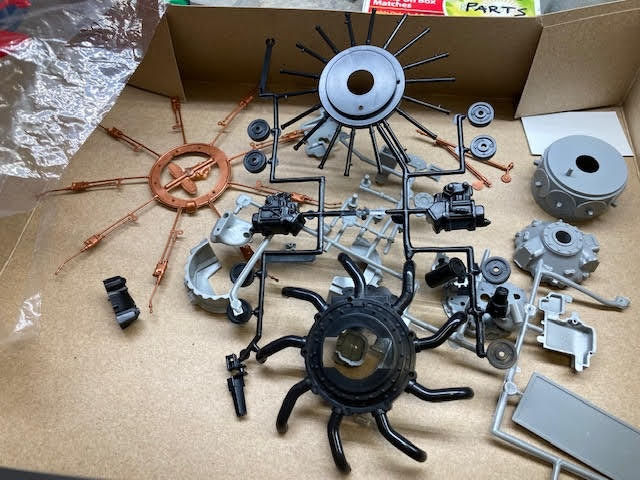 Monogram
released this 64-part kit in 1959, and I am still amazed at the quality and
outstanding engineering of it. Atlantis Models must have cleaned up the molds as
there was very little flash on this latest release. When I saw Atlantis Models
had re-released the former Monogram Wright Cyclone radial engine kit, I knew I
had to have one…once again! I built the original Monogram version in 1962 when I
was 13 years old for my 8th grade science project, “How a Radial Aircraft Engine
Works”. In 1962 I built it right out of the box with some assistance from my dad
who had a lot of experience with radial engines as a mechanic for Eastern
Airlines. So, for my recent birthday, my wife Kathleen gave me this wonderful
model gift as she so often does, another reason we’ve been married 54 years!
Monogram
released this 64-part kit in 1959, and I am still amazed at the quality and
outstanding engineering of it. Atlantis Models must have cleaned up the molds as
there was very little flash on this latest release. When I saw Atlantis Models
had re-released the former Monogram Wright Cyclone radial engine kit, I knew I
had to have one…once again! I built the original Monogram version in 1962 when I
was 13 years old for my 8th grade science project, “How a Radial Aircraft Engine
Works”. In 1962 I built it right out of the box with some assistance from my dad
who had a lot of experience with radial engines as a mechanic for Eastern
Airlines. So, for my recent birthday, my wife Kathleen gave me this wonderful
model gift as she so often does, another reason we’ve been married 54 years!
| CONSTRUCTION |
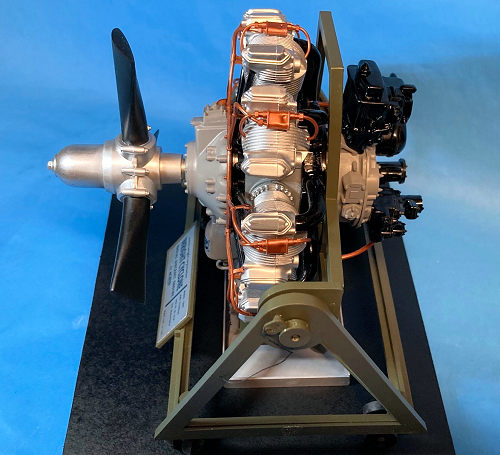 I
decided to make mine look like a B-17 engine on the display stand without the
visible piston feature. Everything went together quite easily as someone in 1959
did a superb job of engineering a kit that is almost impossible to assemble
incorrectly. The model goes together in six layers like a sandwich, nose case,
ignition wiring harness, pushrods, cylinder case, supercharger section, and
accessory section. The one-piece molded copper color ignition wiring harness is
a clever touch and went together without a drop of adhesive, just clicking into
place.
I
decided to make mine look like a B-17 engine on the display stand without the
visible piston feature. Everything went together quite easily as someone in 1959
did a superb job of engineering a kit that is almost impossible to assemble
incorrectly. The model goes together in six layers like a sandwich, nose case,
ignition wiring harness, pushrods, cylinder case, supercharger section, and
accessory section. The one-piece molded copper color ignition wiring harness is
a clever touch and went together without a drop of adhesive, just clicking into
place.
If you pay close attention to the indexing slots and tabs, you end up with a perfectly assembled Cyclone model. My only complaint is that if you don’t use the visible cylinder option, the prop shaft can drop inside the engine until the prop is installed.
So, I added a length of tubing to the rear of the shaft that keeps it in place. And secondly, why was the left magneto not included in either release? Other than that, it was a pure pleasure to build. Black thread was used for the locking pins on the stand and the data plate decals were applied and the prop installed to finish the Cyclone.
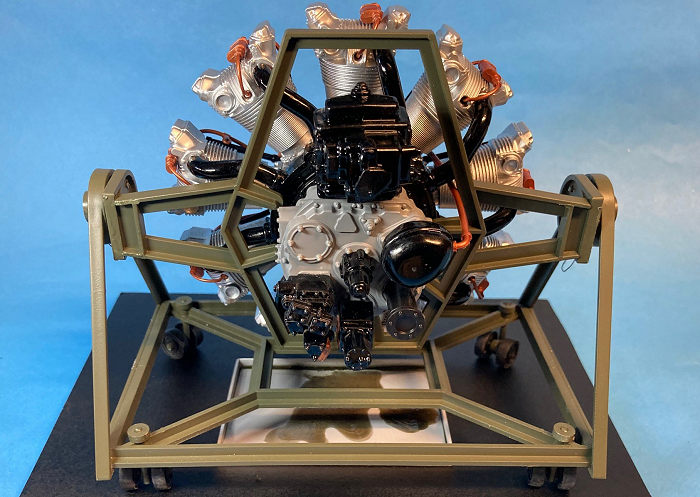 When I
showed in-progress photos to my best friend, he jokingly suggested I needed to
put a puddle of oil under the notoriously oil leaking Cyclone…so I did!
When I
showed in-progress photos to my best friend, he jokingly suggested I needed to
put a puddle of oil under the notoriously oil leaking Cyclone…so I did!
I fabricated a drip pan like the ones under every 1:1 radial engine you’ll find, made from sheet styrene and painted steel. I mixed up some brown/black paint and thinned it with Future to give it a wet look when dry and dripped a few drops into the pan. It was a brilliant idea by my friend that added interest and additional realism to the model. You can see this in the image to the left.
To make the 1:12 Wright R-1820 Cyclone look as realistic as possible, I decided to paint all the parts just like a real one, using Tamiya TS Acrylic Lacquers, and referred to various period photos of the real B-17 Cyclone.
| CONCLUSIONS |
My Cyclone was completed in a pleasurable 20 hours over 10 days. This latest Cyclone looks much better than the one built in 1962 as my modeling skills have hopefully improved over 60 years!
It is a well-designed kit and would be a pleasure for any modeler to build. I think Atlantis Models is onto something very exciting with the release of so many of the old Monogram, Revell, Aurora and other model kits from us senior modelers early years. They are also providing educational STEM projects for kids.
H. Davis
Gandees 25 August
2025 Copyright ModelingMadness.com. All rights reserved. No
reproduction in part or in whole without express permission from the editor.
If you would like your product reviewed fairly and fairly quickly, please
contact
the editor or see other details in the
Note to
Contributors.