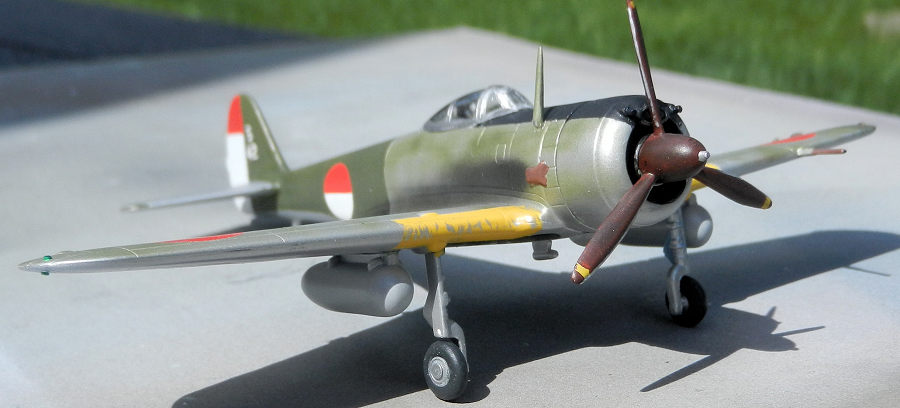
LS 1/72 Ki-43-II Oscar
| KIT #: | 1002 |
| PRICE: | CAD$9.96 |
| DECALS: | Five options |
| REVIEWER: | Pablo Calcaterra |
| NOTES: | 1963 Tooling |
| HISTORY |
 When
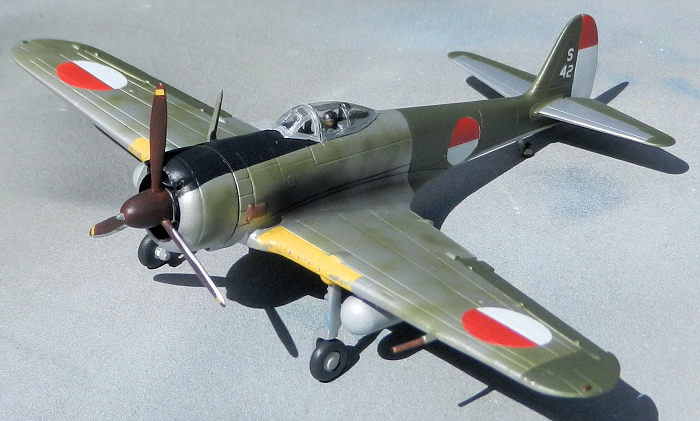
the Japanese surrendered there were several Oscars left around Indonesia. When
the fight for independence from the Dutch started the Indonesians put together
around 12 airframes using parts from several Oscars.
As far as I have been able to find the planes had issues with their engines and were not able to participate in missions against the Dutch.
| THE KIT |
Typical of the ‘60s the kit has raised panel lines, lack of details in the wheel wells and poseable moveable surfaces.
Decals are for only Japanese planes.
| CONSTRUCTION |
 The interior
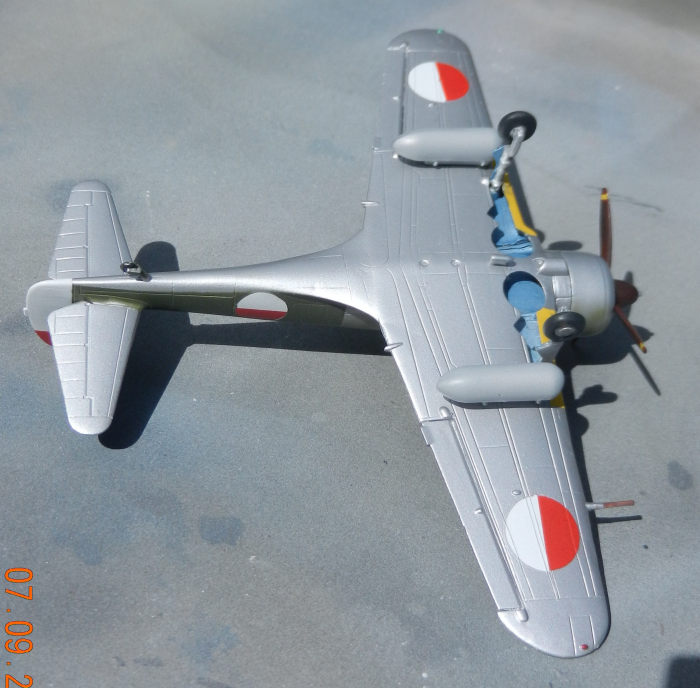
only has the pilot and a set. I painted the walls in a mix of aluminum and light
blue. The pilot was painted carefully and glued to the seat.
I found that there was a large see thru from the wheel wells up to the cockpit in the fuselage area. By chance I had a piece of scrap plastic that was EXACTLY the same width and length that I needed. With this I blanked this hole. I painted it also, along with the internal face of the landing gear doors and the wells in the same mix of aluminum and light blue.
Fuselage sides were next. A bit of sanding and rescribing was needed but nothing major. Same happened with the wings and the tail surfaces. For a 1963 kit I was gladly surprised with the fit. A tiny bit of Vallejo liquid putty was used at the wing roots but nothing else.
I attached the cowling using white glue to ensure the colour pattern matched as the propeller was going to be installed after painting.
| COLORS & MARKINGS |
The
kit received a coat of Tamiya white primer from the rattle can. I cut the
circles for the Indonesian insignia and covered the white areas on the 4 wing
positions. I also masked the lower portion of the rudder. I painted the yellow
ID bands and the propeller tips and masked them. Then I sprayed the plane with
Vallejo Aluminum, and after masking it I used Vallejo 70.893 for the green
areas. Very diluted green paint was used the create the wiggles and lines on the
fuselage and wings. Clearly the front part of the fuselage and the wings came
from one plane except for the ailerons and one wingtip. The horizontal tail
planes were from a different plane, and the elevators probably from the same
plane that donated the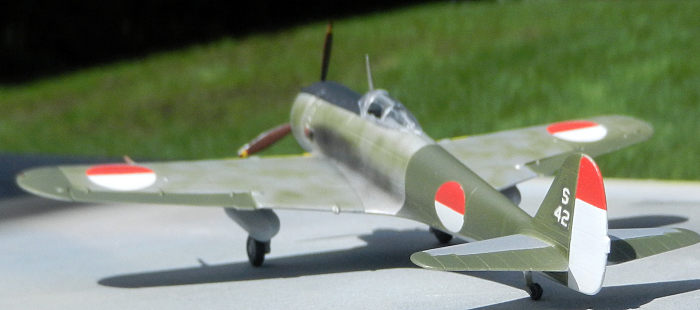 wingtip and other green parts…
Black paint was used for the antiglare panel, Vallejo dark brown for the propeller. Using the “negative” of the masks of the national insignias I painted their top portion in red.
The frames of the canopy/windshield were hand painted.
Drop tanks were painted with Vallejo 71.046. Some chipping was added to the yellow ID bands. Exhausts were painted Vallejo rust.
I designed “S-42” for the tail and printed it in white decal paper with a very narrow green edge. Having brushed Future on the tail I than applied the decals and carefully retouched/blended the green edge with the rest of the tail using a very fine brush.
| FINAL CONSTRUCTION |
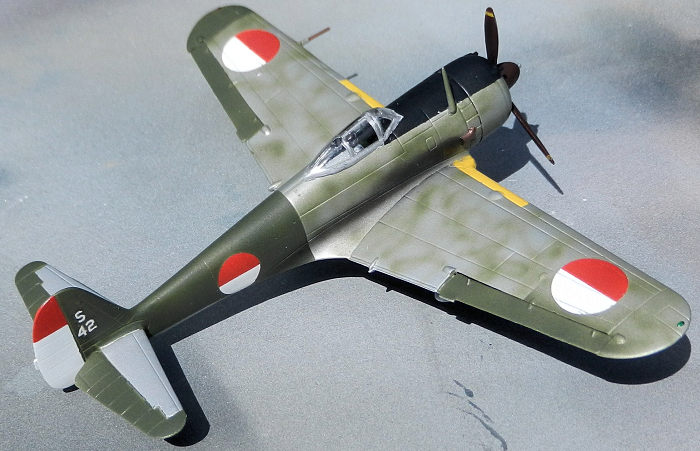 I glued the
spinning propeller to the engine, the cowling was now presented to the fuselage
again. With sanded black pastels and a brush I applied stains on the fuselage
behind the exhausts. The propeller tip was painted aluminum, the pitot in rust.
Formation lights were painted with ModelMaster clear read and green. The tail was airbrushed with Model Master Matt varnish.
The canopy and antenna mast wer attached and with that the Oscar was ready.
| CONCLUSIONS |
Simple, no headaches. A surprisingly good vintage kit from the 60s that I presented to my work colleagues in Indonesia who now have it in a display box in their meeting room along with my dedication (made with a piece of plastic sprayed in Vallejo Gold and then covered with a clear decal with my text).
5 November 2026
Copyright ModelingMadness.com. All rights reserved. No reproduction in part or in whole without express permission from the editor.
If you would like your product reviewed fairly and fairly quickly, please contact the editor or see other details in the Note to Contributors.