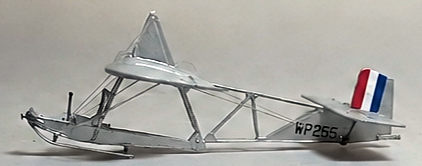
Special Hobby 1/72 EoN Eton TX.1
| KIT #: | SH72442 |
| PRICE: | 5 Euros |
| DECALS: | Five optionse |
| REVIEWER: | Spiros Pendedekas |
| NOTES: |
| HISTORY |
Some aircraft become famous because of their speed, their combat achievements, or the technological innovations they introduced. Others become important for a much simpler, but perhaps even more meaningful reason: they taught generations of people how to fly.
The Schulgleiter SG 38 belongs firmly to this second category. It was not a glamorous aircraft, nor was it designed to break records. Instead, it was created with one simple purpose in mind: to introduce beginners to the fundamentals of flight in the safest, simplest, and most affordable way possible.
Developed in Germany
during the late 1930s, the SG 38 was the ultimate expression of simplicity in
aviation. Its design philosophy was based on the idea that a student pilot
should learn to und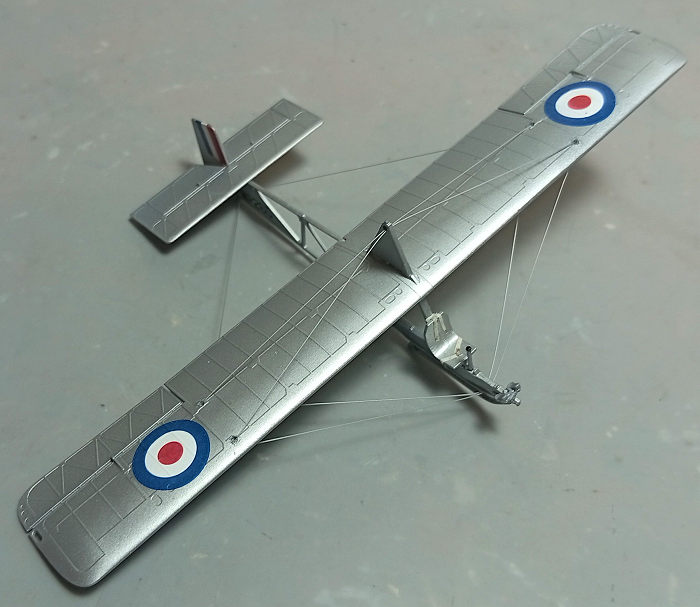 erstand
the aircraft and the air itself, without the distraction of complex systems.
There was no engine management, no complicated cockpit, and no unnecessary
equipment. The pilot sat in an open cockpit, surrounded by a simple tubular
structure, with nothing between him and the elements except his own skill and
judgement.
erstand
the aircraft and the air itself, without the distraction of complex systems.
There was no engine management, no complicated cockpit, and no unnecessary
equipment. The pilot sat in an open cockpit, surrounded by a simple tubular
structure, with nothing between him and the elements except his own skill and
judgement.
Construction followed the same philosophy. A lightweight steel-tube fuselage, wooden wings, fabric-covered flying surfaces, and extensive external bracing resulted in an aircraft that was inexpensive to build, easy to maintain, and extremely reliable. The SG 38 was launched by bungee cord, and each short flight taught the student valuable lessons about balance, control, and the behaviour of an aircraft in the air.
Thousands of young pilots took their first steps into aviation through the SG 38. For many of them, that first silent glide above a grass airfield became the beginning of a lifelong passion for flying.
After the Second World War, Britain recognized the value of this simple but effective design. Instead of developing a completely new primary trainer, Elliotts of Newbury (EoN) produced a British version of the SG 38, known as the EoN Eton TX.1.
The Eton retained the same philosophy as its German predecessor. It was a machine designed not for speed or performance, but for education. Used by British flying organizations, including the Royal Air Force Air Training Corps, it introduced countless young cadets to the fundamentals of aviation.
Climbing into the open cockpit of an Eton TX.1 must have been a unique experience. With the wind flowing around the pilot, the simple framework visible all around, and the aircraft responding immediately to every control input, flying became a direct conversation between pilot and machine.
Today, the SG 38 and the EoN Eton TX.1 are remembered with great affection. They represent a golden era of aviation training, when learning to fly depended less on technology and more on understanding the aircraft, the weather, and the air itself.
| THE KIT |
Special Hobby first introduced its all-new 1/72 tooling of the SG 38 in 2015. The company later released other versions based on this tooling, including the EoN Eton TX.1, which appeared in 2020. This was a natural choice, as the British Eton was, practically speaking, a direct copy of the famous German primary trainer.
The particular kit
reviewed here is the 2020 EoN Eton TX.1 edition. It was kindly donated in good
numbers by one of our beloved Greek hobby shops to our local modelling club,
with the purpose of giving them as a welcome present to newcomers attending the
modelling seminars we organize for children.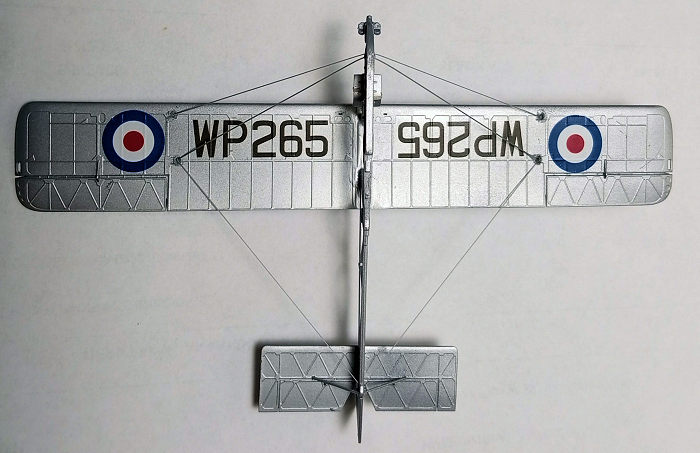
This particular example had a very special destination. It belonged to my elder son, who received it as a such gift from our modelling club. At eleven years old, his enthusiasm for modelling is sometimes greater than his patience, but his interest and curiosity are always there. After opening the box and admiring the contents, he brought the kit to my workbench and, instead of the usual "Dad, build it," he simply said:
"Dad, let's build it together."
Needless to say, I could not resist. The Eton had always been one of those charming little aircraft that attracted my attention, and building it together made this project something much more special than just another model.
For an in-depth look at the kit contents, sprues, instructions, decals, and construction details, please look no further than the ever-growing Modeling Madness archives, where the complete kit preview can be found.
| CONSTRUCTION |
Construction could hardly have been simpler, which perfectly reflects the uncomplicated nature of the real aircraft.
I started by attaching the tailplanes to the main fuselage framework, followed by the supporting struts. The beautifully molded one-piece wing was then fitted to the forward section of the frame, followed by the correct rudder pedals for the particular version being built.
That was essentially it.
 The
simplicity of the assembly is one of the great pleasures of this kit. Fit was
excellent throughout, and there were no complaints whatsoever during
construction. The engineering is clever and perfectly suited to the subject.
The
simplicity of the assembly is one of the great pleasures of this kit. Fit was
excellent throughout, and there were no complaints whatsoever during
construction. The engineering is clever and perfectly suited to the subject.
The only area that required a little attention was a small gap on the underside of the wing where it met the fuselage framework. I am not completely certain how this area appeared on the real aircraft, but after examining photographs, I decided to fill it with liquefied styrene to create a smoother and more homogeneous transition.
With kust a tiny bit of sanding required afterwards, as the melted styrene blended perfectly with the surrounding plastic, construction was complete and the little glider was ready for the paint shop.
| COLORS & MARKINGS |
Having decided to build a British example, the choice of finish was quite obvious. The EoN Eton TX.1 wore the familiar post-war High-Speed Silver scheme, and I did not hesitate for a moment before reaching for my beloved Humbrol 11 Silver, which has a permanent place in my paint collection—while stocks last!
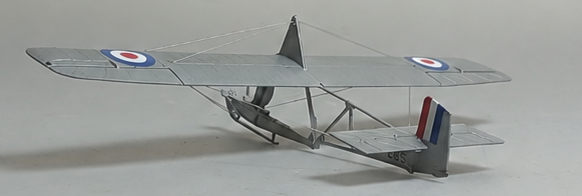 The entire
model was sprayed in this finish, which suited the delicate character of the
glider beautifully. The silver finish also highlighted the finely reproduced
framework and fabric-covered surfaces. After the paint had dried, it was time
for the decals.
The entire
model was sprayed in this finish, which suited the delicate character of the
glider beautifully. The silver finish also highlighted the finely reproduced
framework and fabric-covered surfaces. After the paint had dried, it was time
for the decals.
The decals were excellent. They detached easily from the backing paper, behaved perfectly during application, and settled beautifully over the ribs, framework, and other small details of the airframe and wings, without the need of any decal solution. Considering the delicate structure of the Eton, this was especially important, and the decals really contributed to the final appearance of the model. Bravo Special Hobby!
Once everything was properly dry, a coat of Future was applied to seal the decals and prepare the model for the final details.
| FINAL CONSTRUCTION |
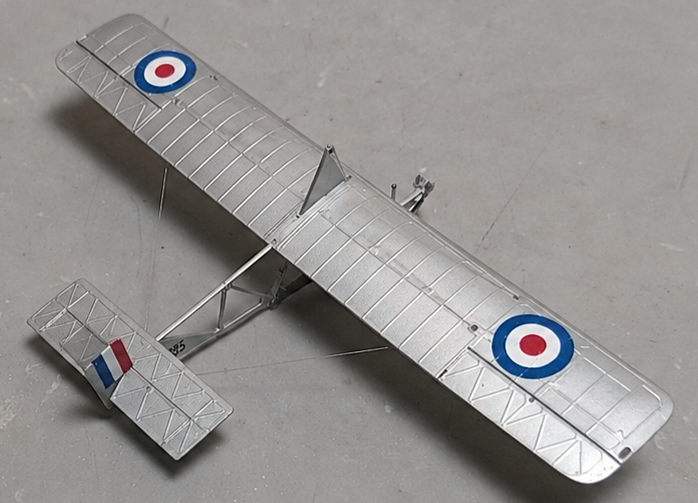 One of the
most distinctive features of the EoN Eton TX.1 is its extensive rigging, and I
decided that this was something that simply could not be omitted.
One of the
most distinctive features of the EoN Eton TX.1 is its extensive rigging, and I
decided that this was something that simply could not be omitted.
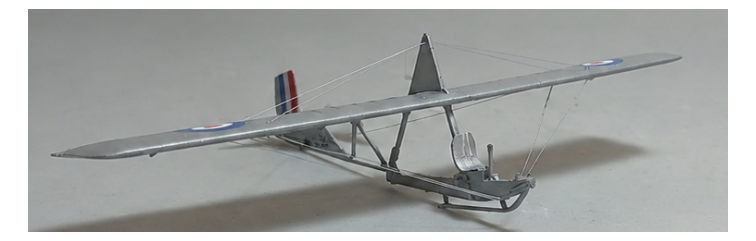
Using stretched sprue in various lengths, I carefully added the rigging to the appropriate attachment points on the airframe. Although this required patience and careful handling, it transformed the appearance of the model and brought the delicate structure of the real glider to life. The rigging is such an important visual feature of the aircraft that I believe it is well worth the extra effort.
Satisfied with the result, I added simple seat belts from masking tape, painting their ends bronze, to simulate the buckles, and the little Eton was finally complete.
A simple, enjoyable, and very rewarding build of a charming aircraft with a wonderful story behind it.
| CONCLUSIONS |
Special Hobby deserves to be congratulated for bringing us a modern tooling of such an unusual yet historically important aircraft. The EoN Eton TX.1 is certainly not a mainstream subject, but these are exactly the kinds of releases that make our hobby so interesting.
Having now built the kit, I can confidently say that it is an excellent model. The molding is crisp and sharp, the delicate framework is beautifully represented, construction is a pleasure, and the fit is excellent. The instructions are clear and easy to follow, while the decals are among the best aspects of the kit, performing flawlessly during application.
The finished model has tremendous character. The addition of the rigging enhances the fragile appearance of the glider and gives the completed model a very distinctive presence.
Although it can certainly be appreciated by experienced modellers, this is also a kit that could introduce younger builders to the joy of modelling. Its simplicity, unusual subject, and rewarding final appearance make it an ideal project for someone taking their first steps in the hobby. The rigging, while adding an extra level of realism for more experienced modellers, can easily be omitted by beginners without affecting the overall appeal of the finished model. Alternatively, it can provide a great opportunity for younger builders to experiment and develop new skills as they progress.
There are other Eon Eton and SG 38 kits available from manufacturers such as Huma Modell and KP, but Special Hobby's offering stands extremely high thanks to its excellent molding quality, ease of construction, superb decals, and attractive price.
In the end, though, this build was about more than just plastic, paint, and glue. This was my son's kit. A gift from our modelling club. A project we shared together. And when the model was finished, the smile on his face said everything.
Thanks to Eleni's Gift Box for the review sample.
Apologies for the variable size of the images. I work with what is sent in. Ed.
Happy Modeling!
10 August 2026
Copyright ModelingMadness.com. All rights reserved. No reproduction in part or in whole without express permission from the editor.
If you would like your product reviewed fairly and fairly quickly, please contact the editor or see other details in the Note to Contributors.