
| KIT #: | F161 |
| PRICE: | 7/6 many years back |
| DECALS: | Two options |
| REVIEWER: | Carmel J. Attard |
| NOTES: |
| HISTORY |
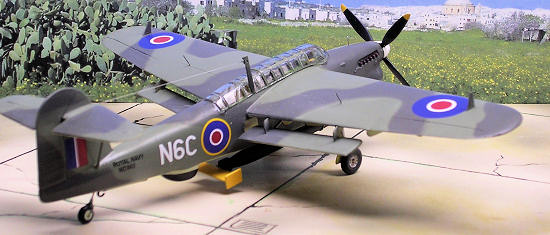 The emerged basic design of the Barracuda included a span of 50’,
reducing to 18’ when folded, a length of 37’ and a height of 14’9” with the tail
down. A maximum speed of only 18 knots at rated altitude at a maximum all up
weight of 10,500 lbs, an endurance of 6 hours (8 hours with extra fuel) at 120
knots at 2,000ft. Typically it could carry a 1,500lb torpedo or bomb load. It
had to be able to dive at 70 degrees for dive-bombing load and was suggested
that flaps should provide stability in the dive and recovery. Defensive armament
was to have a single fixed forward firing .303 machine gun and one or two for
the Telegraphist air gunner in the rear cockpit. Six under wing hard points
allowed a combination of bombs up to 1,500 lbs. Trials with 827 Sq in early 1943
to carry four 500 lb bombs was abandoned due to poor handling and loss of
performance. Instead a 1,600 lb mine could be added.
Early versions were powered by Merlin 30 with a 3-blade variable-pitch
propeller and constant speed unit. The Mk II and Mk
The emerged basic design of the Barracuda included a span of 50’,
reducing to 18’ when folded, a length of 37’ and a height of 14’9” with the tail
down. A maximum speed of only 18 knots at rated altitude at a maximum all up
weight of 10,500 lbs, an endurance of 6 hours (8 hours with extra fuel) at 120
knots at 2,000ft. Typically it could carry a 1,500lb torpedo or bomb load. It
had to be able to dive at 70 degrees for dive-bombing load and was suggested
that flaps should provide stability in the dive and recovery. Defensive armament
was to have a single fixed forward firing .303 machine gun and one or two for
the Telegraphist air gunner in the rear cockpit. Six under wing hard points
allowed a combination of bombs up to 1,500 lbs. Trials with 827 Sq in early 1943
to carry four 500 lb bombs was abandoned due to poor handling and loss of
performance. Instead a 1,600 lb mine could be added.
Early versions were powered by Merlin 30 with a 3-blade variable-pitch
propeller and constant speed unit. The Mk II and Mk
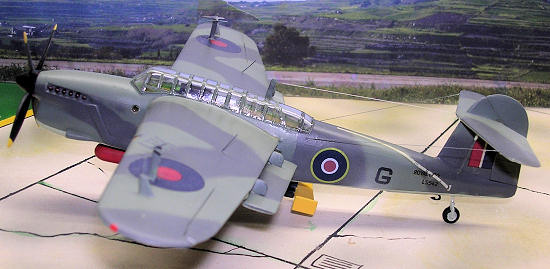 Several home based carriers and their complement of Barracudas were used
during the latter stages of the war for attacks on German shipping in and around
the Norwegian coastline. Several air groups were involved with most aircraft
carrying bombs whilst a few had torpedoes fitted.
Several home based carriers and their complement of Barracudas were used
during the latter stages of the war for attacks on German shipping in and around
the Norwegian coastline. Several air groups were involved with most aircraft
carrying bombs whilst a few had torpedoes fitted.
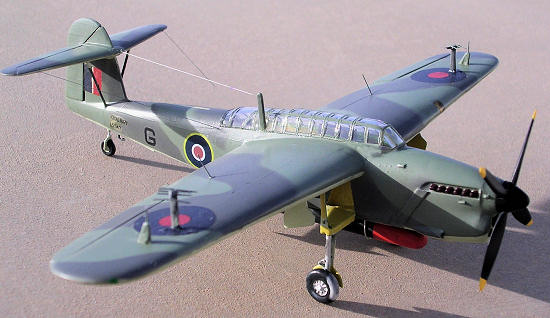 The Fairey Barracuda is also listed among the endless list of aircraft
that operated in
The Fairey Barracuda is also listed among the endless list of aircraft
that operated in | THE KIT |
| CONSTRUCTION |
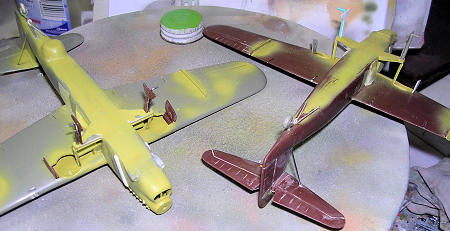 scribed while making reference to drawings and Barracuda photos.
The long glass cockpit canopy yearns for additional details to the crew
compartment. The two air intakes at
sides of nose are drilled and filed to shape the opening. These were blanked
with a black piece of plastic card from deep inside. The main air intake had a
divider bracket added. This was in form of an inverted ‘Y’ and was built from
pieces of plastic card. Inside to the bracket fine copper gauze was glued. The
next stage is detailing the canopy interior. Appropriate radio and navigation
equipment was fitted in the observer’s spacious compartment where the observer
also had the advantage of bulged transparency below the wing root to allow
downward vision for taking bearings. Under the continuous transparent canopy an
instrument panel was added to the pilot area, rudder pedals, control stick and
side consoles. Bulkhead was also fitted and added head rest to seat position.
Another crew seat added forming a total of three. Crew figures were carefully
painted in FAA style of overall with a yellow mea-west.
scribed while making reference to drawings and Barracuda photos.
The long glass cockpit canopy yearns for additional details to the crew
compartment. The two air intakes at
sides of nose are drilled and filed to shape the opening. These were blanked
with a black piece of plastic card from deep inside. The main air intake had a
divider bracket added. This was in form of an inverted ‘Y’ and was built from
pieces of plastic card. Inside to the bracket fine copper gauze was glued. The
next stage is detailing the canopy interior. Appropriate radio and navigation
equipment was fitted in the observer’s spacious compartment where the observer
also had the advantage of bulged transparency below the wing root to allow
downward vision for taking bearings. Under the continuous transparent canopy an
instrument panel was added to the pilot area, rudder pedals, control stick and
side consoles. Bulkhead was also fitted and added head rest to seat position.
Another crew seat added forming a total of three. Crew figures were carefully
painted in FAA style of overall with a yellow mea-west. 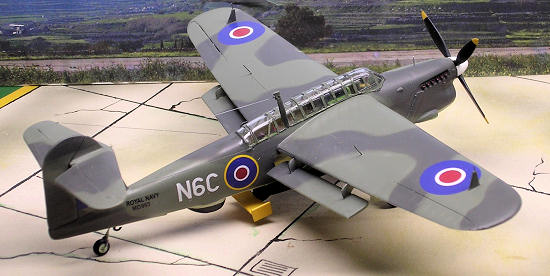 Needle files refined the exhaust stubs and also added a lower end
extension using a flat piece of plastic shaped and fitted at a vertical
inclination to side of nose. More detail is now added to other areas externally.
A tiny pitot tube bent at 90 degrees was fitted under port wing. Tail wheel leg
was replaced with a stronger one made from metal wire. Footsteps added on port
side of fuselage for both cockpit entries, thinned down the wing fences, since
MD965 that I modeled carried an
Needle files refined the exhaust stubs and also added a lower end
extension using a flat piece of plastic shaped and fitted at a vertical
inclination to side of nose. More detail is now added to other areas externally.
A tiny pitot tube bent at 90 degrees was fitted under port wing. Tail wheel leg
was replaced with a stronger one made from metal wire. Footsteps added on port
side of fuselage for both cockpit entries, thinned down the wing fences, since
MD965 that I modeled carried an | COLORS & MARKINGS |
| CONCLUSIONS |
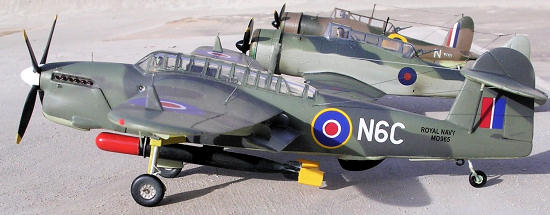 Considering the age on the kit and compared with more recent issues by
Special Hobby (at some 16 times the cost of one Frog kit) I realized it was with
some effort to do the upgrade but was well worthwhile. The Special Hobby kit
that I also have can now be made to join the Squadron too.
Considering the age on the kit and compared with more recent issues by
Special Hobby (at some 16 times the cost of one Frog kit) I realized it was with
some effort to do the upgrade but was well worthwhile. The Special Hobby kit
that I also have can now be made to join the Squadron too.
August 2010
If you would like your product reviewed fairly and quickly, please contact me or see other details in the Note to Contributors.